Interview Practice for NHS and Healthcare Support Roles
How candidates for NHS and healthcare support roles can practise values-based answers, patient communication, and reflective examples.
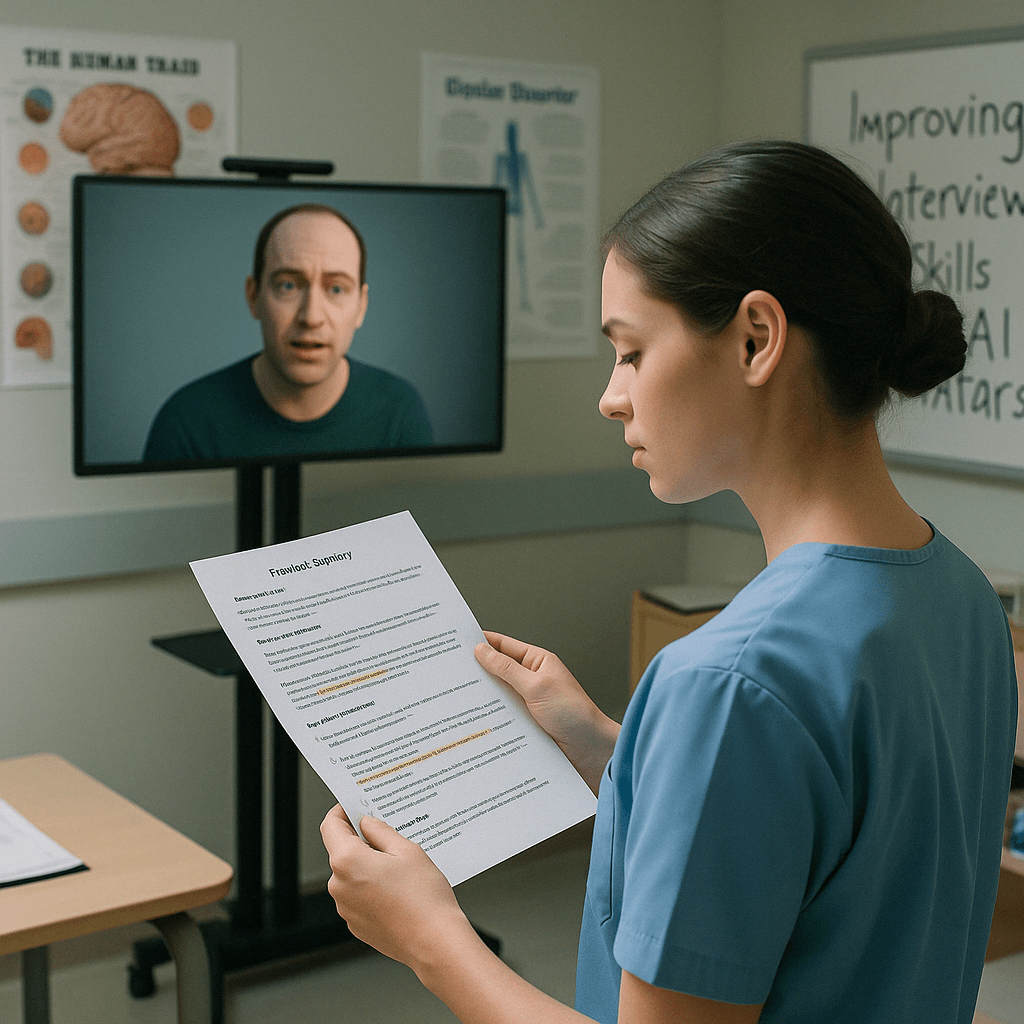
Healthcare interviews often focus on values, communication, judgement, and care.
Candidates may be asked about teamwork, patient dignity, confidentiality, safeguarding, pressure, and how they respond when something goes wrong. These are not always easy questions to answer well without practice.
Avatar-led interview practice can help candidates rehearse realistic answers in a private setting.
Common healthcare interview themes
For NHS and healthcare support roles, candidates may need to discuss:
- why they want the role
- patient dignity and respect
- confidentiality
- equality and inclusion
- teamwork under pressure
- communication with patients and families
- handling conflict or distress
- asking for help when needed
- learning from feedback
Strong answers usually include a clear example, what the candidate did, and what they learned.
Why practice matters
Many candidates have relevant experience but struggle to explain it under interview pressure.
They may give answers that are too general, miss the reflection part, or forget to show how their behaviour links to care values.
Practising with an avatar can help candidates slow down, structure answers, and try different wording before the real interview.
Useful practice questions
A healthcare interview scenario might ask:
- Tell me about a time you helped someone who was distressed.
- How would you protect patient confidentiality?
- Describe a time you worked as part of a team.
- What would you do if you were worried about a patient's safety?
- How do you communicate with someone who is anxious or upset?
- Tell me about a mistake or challenge and what you learned.
These questions are useful because they encourage examples, not just opinions.
Using files for better practice
Candidates or tutors can attach relevant files such as a CV, job description, person specification, or interview preparation notes.
That helps the scenario stay closer to the actual role. It also lets the learner practise connecting their experience to the requirements in front of them.
Keeping the purpose clear
Pxl-Persona is a practice tool. It does not provide clinical advice, assess professional competence, or guarantee interview outcomes.
Its value is in rehearsal: giving candidates more chances to practise thoughtful, respectful, values-based answers before speaking to a real panel.