Using AI Avatars to Simulate Mental Health Conversations: A New Approach to Training
Training future healthcare professionals to support people with mental health conditions requires time, space, and realism — but many education providers are finding i...
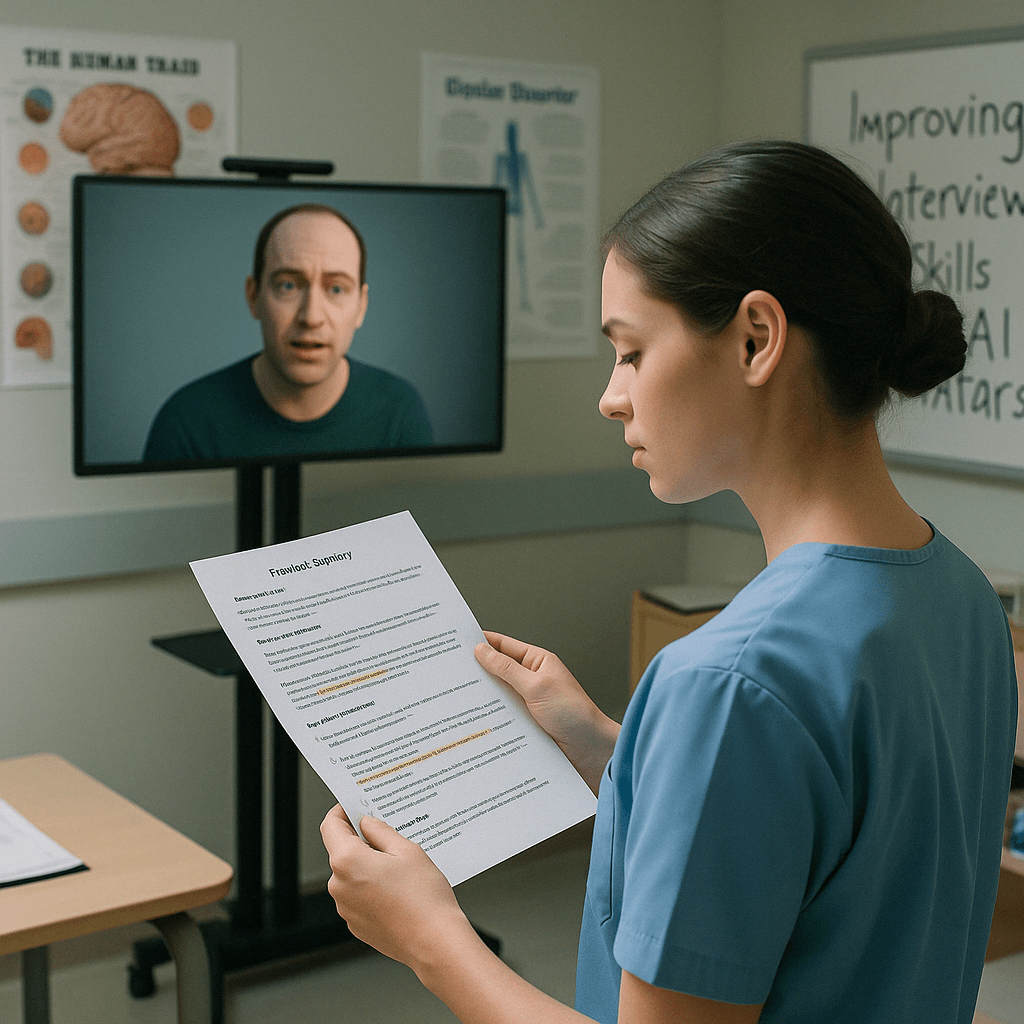
Training future healthcare professionals to support people with mental health conditions requires time, space, and realism — but many education providers are finding it harder than ever to deliver.
At Pxl-Persona, we’ve been working with educators and clinical experts to develop a new kind of training scenario: one where students can practice conversations with AI-powered avatars simulating mental health conditions — including Bipolar Disorder — in a safe, repeatable, and cost-effective way.
No actors required. No pressure to get it right the first time. Just space to learn, reflect, and try again.
Why Mental Health Simulation Training Is Under Pressure
One of our university partners (unnamed due to NDA) approached us in 2024 with a real challenge:
“We used to hire actors to simulate patients with mental health conditions, but the funding’s gone. We can’t run the sessions anymore.”
For years, this training relied on actors coming in for a single day to simulate manic or depressive behaviour. The problem?
-
It was expensive
-
It was hard to schedule
-
Only a handful of students (out of 30–50+) got proper interaction time
-
Students often felt nervous speaking in front of peers and staff
This created gaps in training — and anxiety about asking the “wrong” questions.
A Safer, Smarter Solution: AI Avatar Simulation
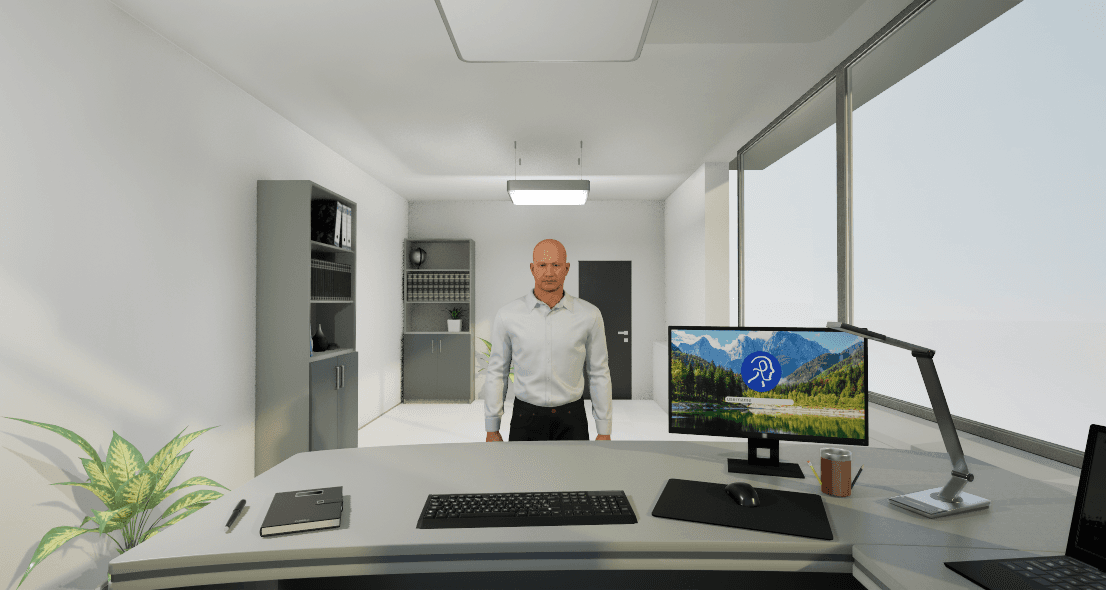
We built a prototype scenario using Pxl-Persona avatars to simulate conversations with individuals who may or may not be experiencing Bipolar Disorder.
The simulation:
-
Begins with an avatar configured to display manic, depressive, or mixed symptoms
-
Responds naturally to student questions — with language that jumps topics, speeds up, or breaks into emotional states, as real bipolar symptoms often do
-
Does not aim to diagnose — but gives students the chance to observe, ask, and practice in a pressure-free environment
Each session is unique: while the core behaviour is guided by a consistent prompt and character backstory, the conversation responds dynamically to what the student says — powered by an LLM with controlled guardrails and RAG-based character memory.
Repeatable Practice — Anytime, Anywhere
ecause the simulation runs through Pixel Streaming, it works on any device with a browser. No need for:
-
High-end hardware
-
Complex installation
-
Booking lab time
Students can practise:
-
From home
-
Late at night
-
As many times as they want
And unlike one-off actor sessions, each attempt offers a slightly different conversation — even when using the same avatar. This creates a repeatable learning environment that adapts to the student.
Reflective Learning at Their Pace
At this stage, there’s no formal scoring — but students can choose to send their conversations to themselves via email. This simple feature has had unexpected benefits:
-
Students feel empowered to review on their own terms
-
Educators can ask students to reflect on their own sessions
-
Future versions will include conversation logs for lecturers, with optional analytics for review
By giving control to the learner, we’re helping build confidence — not just competence.
Designed with Safety and Ethics in Mind
We’ve consulted clinical experts in the development of these scenarios. Safeguarding is at the core of what we do, and while this simulation is not a diagnostic tool, we take its impact seriously.
Key considerations:
-
Scenarios simulate mental states, not individuals
-
Sessions are recorded securely for safeguarding and research
-
Deployments can run on university-owned infrastructure if required
-
Our goal is to provide realistic training, not medical advice
As research continues with our academic and healthcare partners, we’re committed to developing ethically, openly, and with guidance from the right voices.
Who This Is For
This avatar simulation is ideal for:
-
Nursing and medical students practising mental health communication
-
Education providers needing low-cost, high-impact simulation tools
-
Universities and NHS trusts exploring scalable training options
-
Researchers building real-world training datasets for conversation and empathy
What’s Next
We’re continuing development to include:
-
Additional conditions and personalities (e.g. ADHD, Anxiety presentations)
-
Custom user accounts with secure logins via AWS
-
Advanced analytics for tracking confidence, conversation trends, and more
-
Session review tools for educators
And above all, more opportunities for students to practise the conversations they’ll need in real life — without fear of getting it wrong.
Interested in exploring mental health simulation avatars for your curriculum or trust?Let’s talk.
Book a private demo for educators Read about secure deployment and safeguarding Discover how we use RAG for behavioural realism