From Exhibit to Avatar: How We Build Museum Guides with Curators
Museums are more than buildings. They are storytellers, educators, and cultural guardians. At Pxl-Persona, we believe technology should amplify that mission, not repla...
Museums are more than buildings. They are storytellers, educators, and cultural guardians. At Pxl-Persona, we believe technology should amplify that mission, not replace it.
Our AI-powered avatars bring exhibits to life by engaging visitors with dynamic, conversational experiences. But behind every avatar is a process designed to work hand-in-hand with curators and museum teams.
Here’s how we take an idea and transform it into a fully interactive guide, and how our new developments are making these experiences more accessible than ever.
Collaboration at Every Stage
We understand that no two museums are the same. Some have teams ready to script every detail, while others prefer us to lead the creative process. Our approach is flexible.
-
Knowledge building: Curators can provide historical data, scripts or content for our AI brain (RAG). Our team works with this material to ensure it is appropriate for conversational use and visitor interactions.
-
Creative development: Museums can influence avatar appearance, style, and tone, from serious educators to light-hearted, child-friendly characters.
-
Testing and refinement: Before public delivery, we run extensive internal testing followed by joint testing with museum teams to refine the avatar’s knowledge and personality.
The result is an avatar that reflects the museum’s voice and meets visitor expectations.
Flexible Technology for Modern Museums
Today, our avatars use Unreal Engine and Pixel Streaming to deliver high-quality 3D environments and lifelike interactions. This means museums don’t need high-end hardware — we handle the rendering, streaming it directly to kiosks, tablets, or even visitor smartphones.
But we’re going further.
We are currently testing a Web3D version of our avatars. This approach allows 3D rendering to run directly on a visitor’s device, significantly reducing costs and increasing scalability. Museums will soon be able to offer avatar guides on their websites or mobile devices without complex infrastructure.
Designed for Engagement
Avatars can be styled for any exhibit:
-
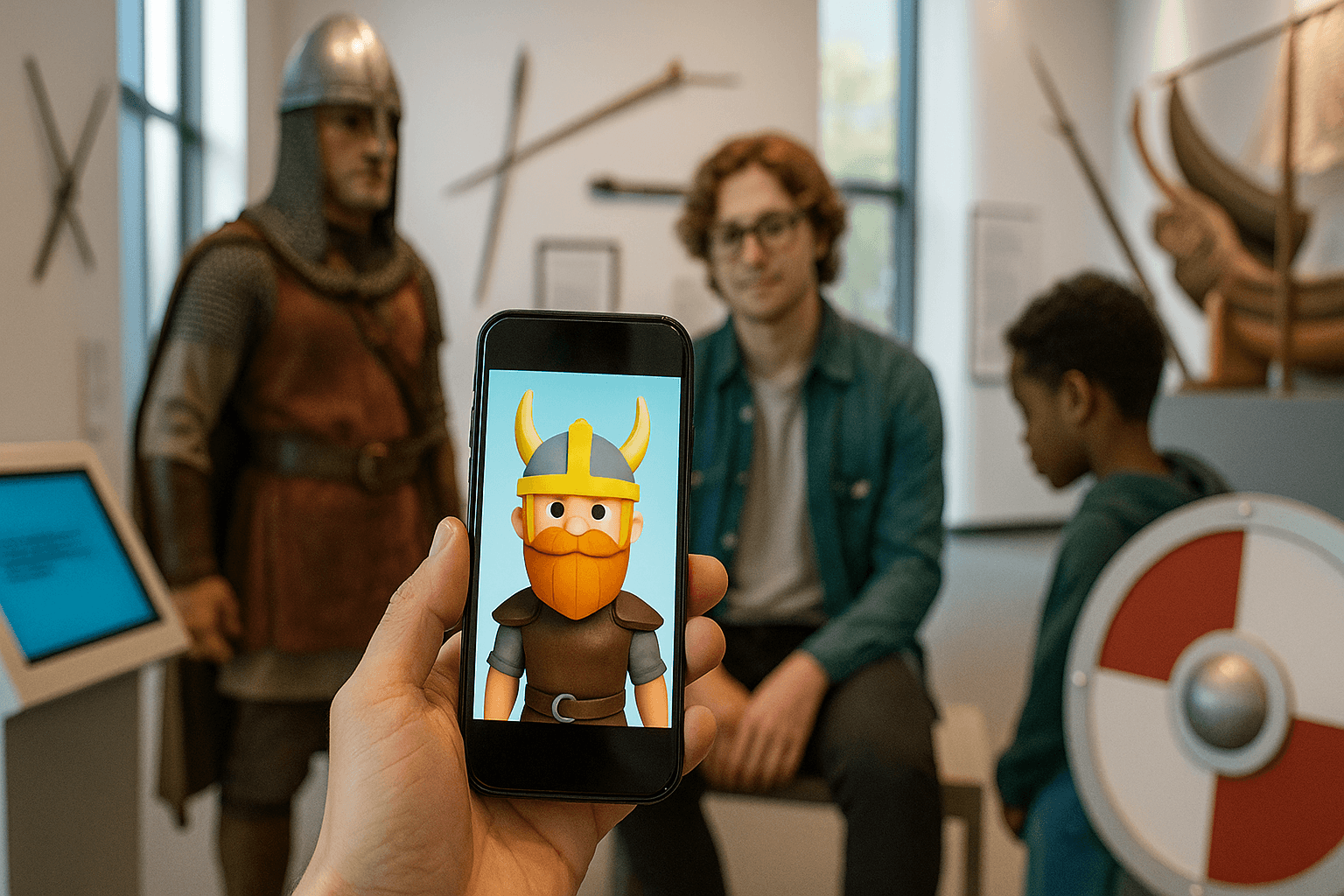
A Viking in a fishing village sharing Norse history
-
A cheerful child in a dinosaur helmet delivering Jurassic facts
-
An astronaut floating among planets explaining space science
This flexibility is key to engaging younger generations and making cultural content feel relevant and immersive. Avatars can also represent diverse identities, allowing museums to reflect their audiences and encourage deeper connections.
Voices That Resonate
Our avatars can use professionally recorded voices, off-the-shelf AI voices, or even the voices of your own team. Pxl-Persona can clone real voices for a personal touch, allowing directors, curators or educators to directly become the voice of their exhibits.
This adds a layer of authenticity that visitors notice and appreciate.
ROI That Goes Beyond Technology
Investing in AI avatars doesn’t just modernise visitor engagement. It offers measurable benefits:
-
Scalability: Serve thousands of visitors simultaneously, on-site or online
-
Cost-effectiveness: Reduce reliance on additional staffing for guided tours
-
Accessibility: Reach audiences outside of opening hours or beyond physical location
-
Longevity: Preserve curatorial expertise within interactive experiences
These benefits position museums at the cutting edge of cultural innovation without overwhelming budgets or teams.
Final Thought
From the first discussion to public deployment, our process keeps curators and educators at the centre. Together, we’re transforming static exhibits into living stories that educate, entertain and inspire.
AI avatars don’t replace human guides. They extend them — making museums more immersive, engaging, and ready for the next generation of visitors.