Metahumans, Blender and Beyond: Our Process for Creating Avatars
Every avatar tells a story. Whether it’s a cheerful Viking guiding schoolchildren through history, a healthcare trainer helping nurses practise conversations, or a sal...
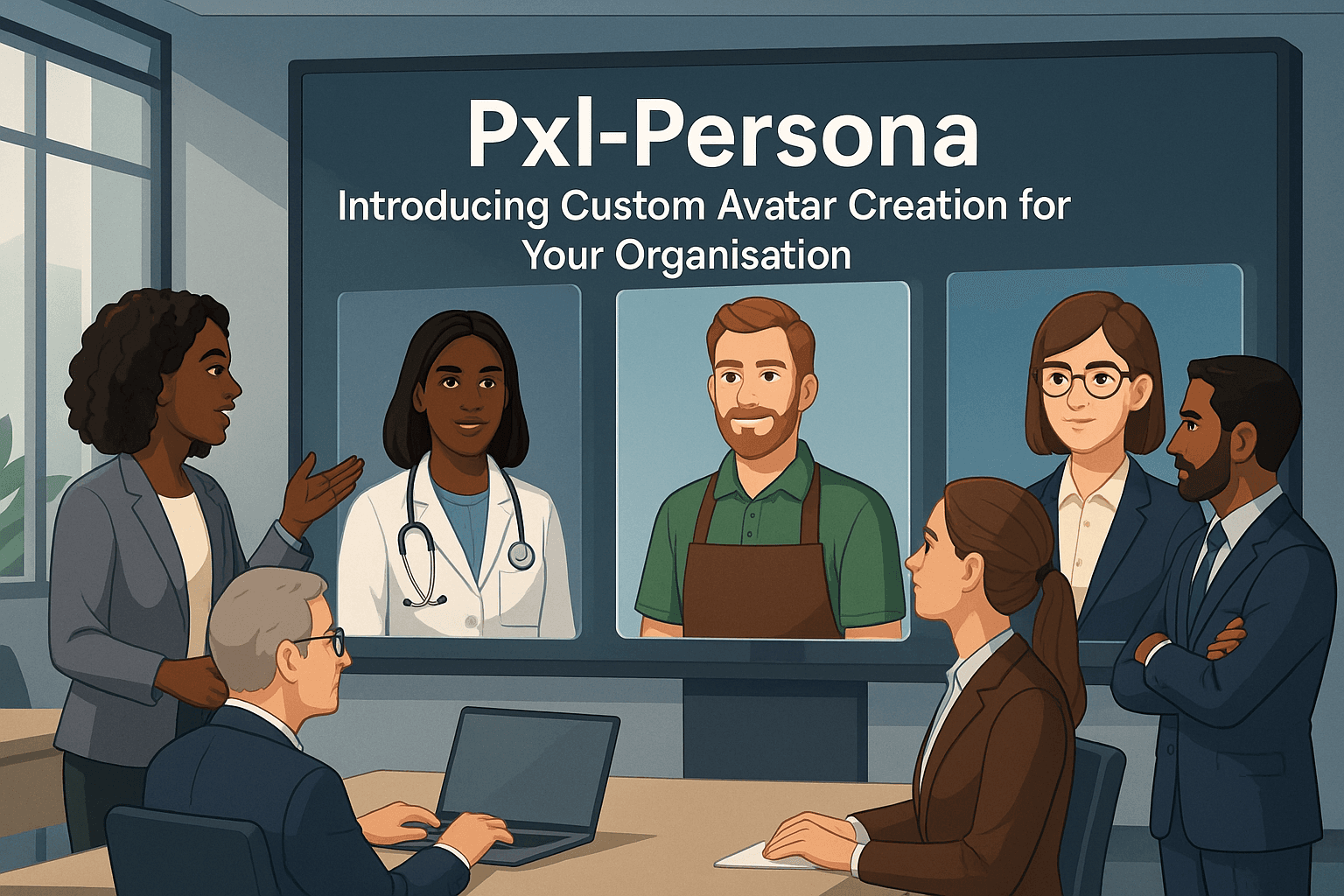
Every avatar tells a story. Whether it’s a cheerful Viking guiding schoolchildren through history, a healthcare trainer helping nurses practise conversations, or a sales assistant answering questions in a retail kiosk, Pxl-Persona builds digital characters that feel real, sound natural and engage audiences.
But how do we bring these avatars to life? Here’s a behind-the-scenes look at our process, from design to deployment.
Stage 1: Planning and Design
The journey begins with a conversation. We work with clients to understand:
-
Who the avatar will interact with
-
The tone and personality it needs (cheerful, professional, neutral)
-
The desired visual style (realistic, stylised, or fully non-human)
-
Accessibility considerations for different audiences
For museums, avatars might be stylised to appeal to younger visitors. In healthcare, they take on a calm, professional presence. Our team can lead creative direction or collaborate closely with a client’s in-house designers.
Stage 2: Modelling in Blender
For fully bespoke characters, we use Blender to craft unique designs from scratch. This allows us to:
-
Create avatars with custom costumes and props
-
Design non-human characters like dinosaurs, robots or mascots
-
Modify base Metahumans for specific client needs
Hair, clothing and accessories can be adjusted to match cultural settings or branded environments, ensuring every avatar fits seamlessly into its role.
Stage 3: Animation and Voice
An avatar isn’t just a static model. It needs to move and speak naturally.
-
Facial Animation: We use NVIDIA Audio2Face, combined with in-house plugins, to synchronise AI-generated speech with lifelike facial movements.
-
Voice Options: Clients can choose from professionally recorded voices, AI-generated voices, or have their own voices cloned securely for use in avatars.
Our pipeline ensures the avatar’s emotional tone is consistent and contextually appropriate, even in multi-turn conversations.
Stage 4: Deployment Options
Once the avatar is ready, we make it accessible anywhere.
-
Pixel Streaming: High-fidelity 3D avatars delivered via Unreal Engine. Ideal for kiosks, tablets or browsers without needing high-end hardware.
-
Web3D (In Development): A lighter solution where 3D rendering happens on the client’s device. This reduces infrastructure costs and supports larger-scale deployments.
This flexibility allows museums, schools, and businesses to choose the best option for their audience.
Why It Matters
Our end-to-end process means clients don’t need multiple suppliers. We manage everything from concept to deployment in-house.
-
For cultural spaces, avatars offer engaging, repeatable visitor experiences.
-
For education, they scale support for thousands of learners.
-
For retail, they guide customers and collect valuable insights.
And because we involve clients throughout, every avatar is a perfect fit for its environment.
Ready to Build Your Avatar?
Bring your ideas to life with Pxl-Persona.