Do Avatars Need Backstories? Why Ours Have Personal Histories
At Pxl-Persona, we don’t just create avatars that look real — we create avatars that think and behave like real people. That means building in personality, context, an...
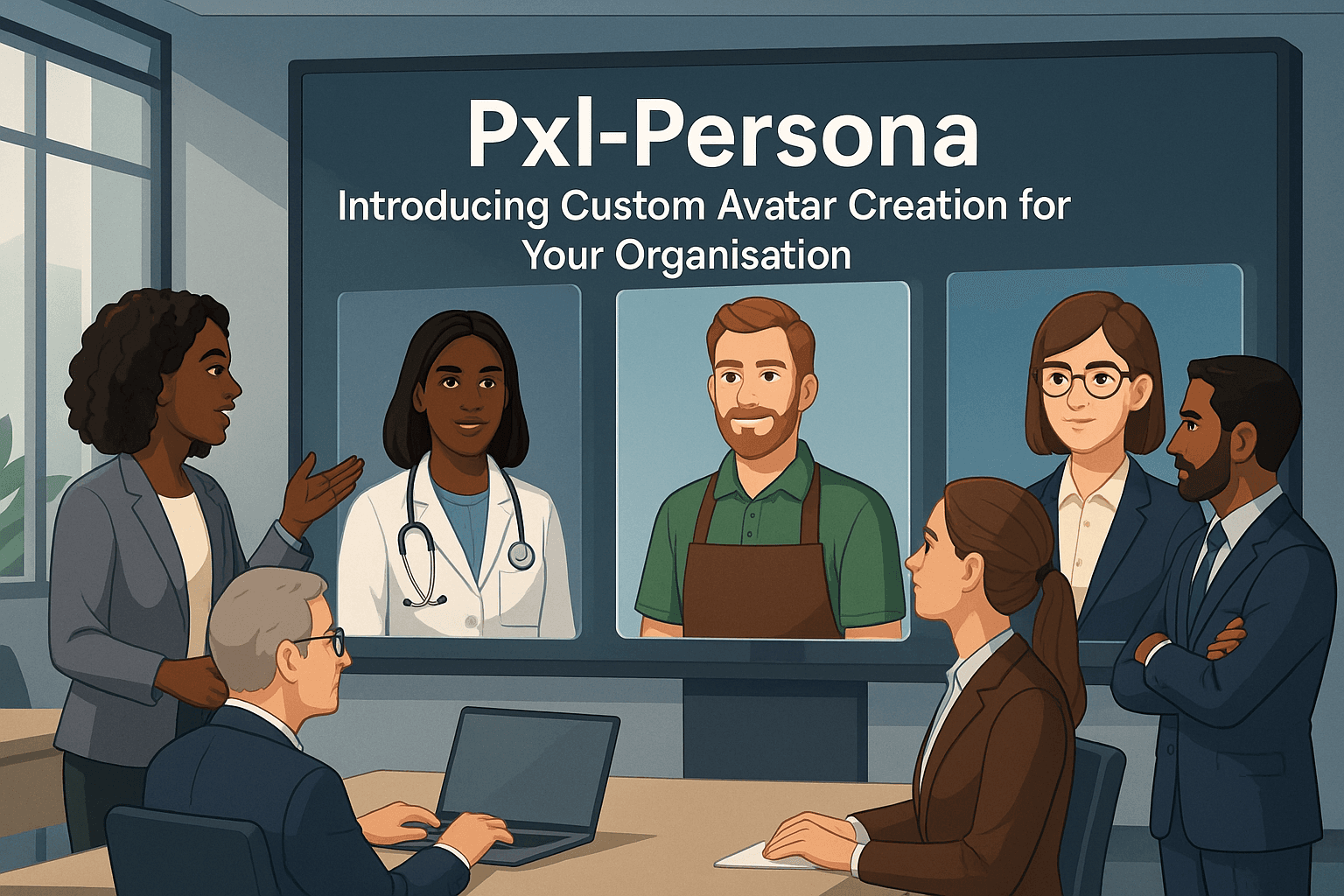
At Pxl-Persona, we don’t just create avatars that look real — we create avatars that think and behave like real people.
That means building in personality, context, and memory — all driven by a carefully crafted backstory.
Whether it’s a construction site manager with strong opinions, a Viking with local fishing knowledge, or a healthcare avatar simulating mental health symptoms, we build each character with a story.
Why? Because backstories change behaviour — and behaviour is what makes training with avatars feel authentic.
Why Backstories Matter in AI Simulation
A generic avatar can ask questions.A character with a history can have a conversation.
When an avatar has:
-
A defined life story
-
Relevant work experience
-
Family context
-
Likes, dislikes, biases and quirks
…it starts to respond with intent, not just logic. That means:
-
It pushes back when something doesn’t make sense
-
It brings in examples from “its past”
-
It remembers emotional context from earlier in the conversation
This creates a more natural, unpredictable, human-like interaction.
Why Our Avatars Have Families
One of the ways we deepen our characters is by giving them realistic family dynamics.
For example, our mental health training avatar simulating Bipolar Disorder has:
-
A strict father, who criticises him for starting projects but not finishing them
-
A supportive mother, who avoids conflict and doesn’t push back — which creates tension with the father
-
A sister, who encourages him but whose praise makes him feel guilty when he lets her down
These relationships influence how the avatar speaks, what topics they avoid, and how they react emotionally during conversations. Just like real people.
We use similar techniques across many of our avatars — especially interviewers.Why? Because small talk is real.
When an interviewer says, “How was your weekend?”, a real person might say:
“Spent time with the family — the kids were climbing the walls!”
If an avatar has a family, it can recognise that moment.It might respond with:
“Ah, I know the feeling — mine were up at 6am both days.”
Suddenly, the avatar isn’t just a tool. It’s a person you can connect with.That’s how trust builds. That’s how training becomes memorable.
How We Build Avatar Backstories
We use a combination of:
-
Prompt engineeringInjecting backstory directly into the avatar’s foundational behaviour (e.g. “You are a construction manager with 30 years on-site experience”)
-
**RAG (Retrieval-Augmented Generation)**Feeding in structured data about industry knowledge, certifications, jargon, slang, even geography
-
Emotional tone shapingDefining the avatar’s outlook: are they proud? Burnt out? Enthusiastic?
All of this is designed to give the avatar depth, without requiring hard-coded scripts or rigid dialogue trees.
Examples from Our Library
Construction Site Interviewer
A simulated avatar trained to run interviews for roles like Quantity Surveyor. Knows construction jargon, expects punctuality, and values direct answers.
Viking Museum Guide
Knows the layout of a Norse fishing village, explains tools and daily life, and reacts in character — even if asked about modern topics.
Mental Health Training Avatar
Simulates behaviours associated with Bipolar Disorder. Speaks in emotional swings, jumps topics, and presents inconsistency — all grounded in a defined character profile.
These avatars aren’t guessing. They’re roleplaying with precision.
Why This Matters for Training
An avatar with a backstory can:
-
Simulate specific personalities (e.g. difficult CEO, anxious patient, dismissive interviewer)
-
Stay consistent across repeated sessions
-
Build learner empathy by creating believable challenges
-
Offer realistic surprises — just like real people
That’s how students and trainees learn. Not by ticking boxes — but by thinking on their feet and adapting to complexity.
Final Thoughts
Do avatars need backstories?
If you want realism, consistency, and meaningful interaction — yes.
At Pxl-Persona, we build each avatar like a character in a film:
-
With history
-
With motivation
-
With purpose
Because the goal isn’t just interaction. It’s immersion.
The more believable the avatar, the more impactful the training.
Build Confidence with Every Practice
Repeatable, flexible, and student-led.